
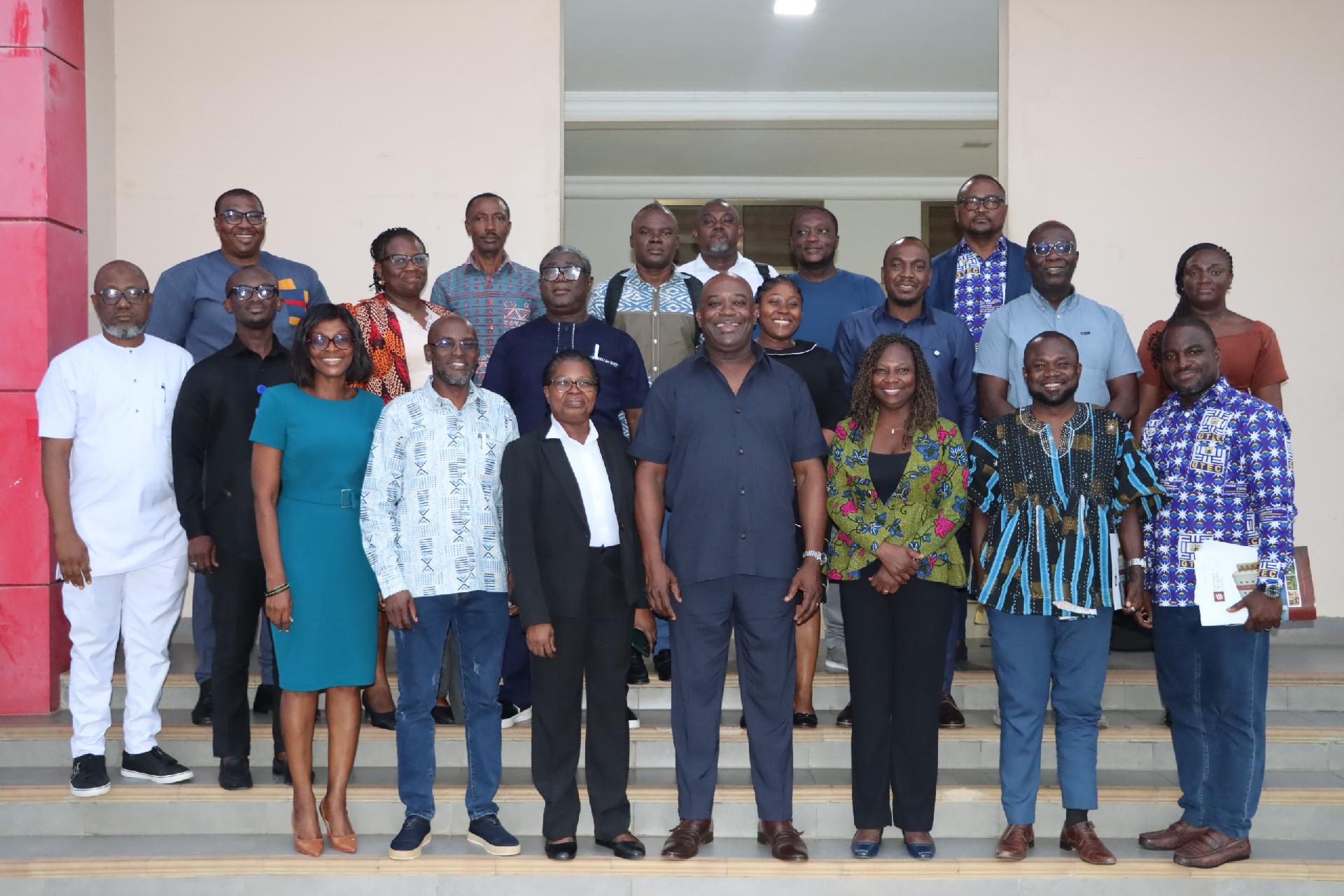
The
Ghana Tertiary Education Commission (GTEC) has successfully concluded its
annual Management Meeting, held from Tuesday, 2nd March to Thursday,
4th March 2026, at the Eastern Premier Hotel in Koforidua. The
retreat convened the Commission’s top leadership, including Directors and Heads
of Departments, to evaluate the performance of the 2025 operational year and
chart a strategic course for 2026.

Presided
over by the Director-General, Prof. Ahmed Jinapor Abdulai, the meeting provided
a platform for robust presentations and deliberations centered on the 2025
Annual Report and the strategic workplans of the various Directorates for 2026.
Reflecting
on the past year, the Commission celebrated a series of landmark achievements
that have significantly enhanced tertiary education delivery in Ghana. Among
these were the following:
1. GTEC
facilitated the donation of brand-new Land Cruiser vehicles to selected
Colleges of Education by the Ministry of Education and the GETFund,
supplemented by the Commission’s direct donation of additional vehicles and
buses.
2. The
2025 GTEC Summer School was also organized to foster collaboration and elevate
educational quality.
3. The
Commission fulfilled its regulatory mandate by recommending the grant of
Presidential Charters to eligible private tertiary institutions.
4. In
a decisive move to ensure stability, GTEC conducted interviews and appointed
Principals to fill vacancies in Colleges of Education.
5. In
a busy operational year, GTEC accredited over 70 private institutions, approved
more than 1,000 academic programmes, and conducted cyclical reviews of five
public universities.
6. Over
600 academic credentials were evaluated, while enforcement against unaccredited
entities was significantly intensified.
7. The
year saw the renovation, commissioning and operationalization of the
Commission’s Conference Hall.
8. High-profile
visits from the Minister for Education, the Chief of Defense Staff, and the
Chief Justice underscored GTEC’s growing stature.
9. Staff
of 46 Public Colleges of Education were successfully migrated onto the public universities'
salary structure.
10. A
National Advisory Group was established to align curricula with labour market
demands
11. A
National Open and Distance Learning (ODL) Policy Framework was developed.
12. On
the digital front, GTEC deployed three key systems; AMIS for
accreditation, CEMS for credential evaluation, and CAPS for
centralized applications, marking a significant leap toward a fully digitized
regulatory environment.
As
the Commission turns its focus to 2026, Management has agreed on a strategic
direction centered on consolidating the gains of 2025 while aggressively
pursuing digital innovation to address emerging challenges.
Key
strategic priorities for the year include:
1. Scaling
up the deployment of digital systems to enhance efficiency, with a focus on
fully operationalizing post-accreditation monitoring and adopting predictive,
data-driven quality assurance models to ensure early detection of
non-compliance.
2. Launching
a sustained crackdown on unaccredited institutions and unaccredited programmes
to ensure full adherence to regulatory standards.
3. Prioritizing
the finalization of the Commission’s Legislative Instrument (L.I.) to
strengthen its legal and operational framework.
4. Continuing
to invest in staff capacity through targeted training, workshops, and
conferences to enhance service delivery.
5. Deepening
collaboration with tertiary institutions, facilitating strategic planning, and
actively exploring external funding opportunities to support the Commission’s
expanded mandate.

Through
these initiatives, the Ghana Tertiary Education Commission reaffirms its
unwavering commitment to fostering a responsive, high-quality, and sustainable
tertiary education sector. By embedding excellence, accountability, and
innovation into its core operations, GTEC aims to solidify its role as a
catalyst for transformative change in Ghana’s higher education landscape.